Footway reconstruction: full structural rebuild and when surface repair stops being enough
 Save
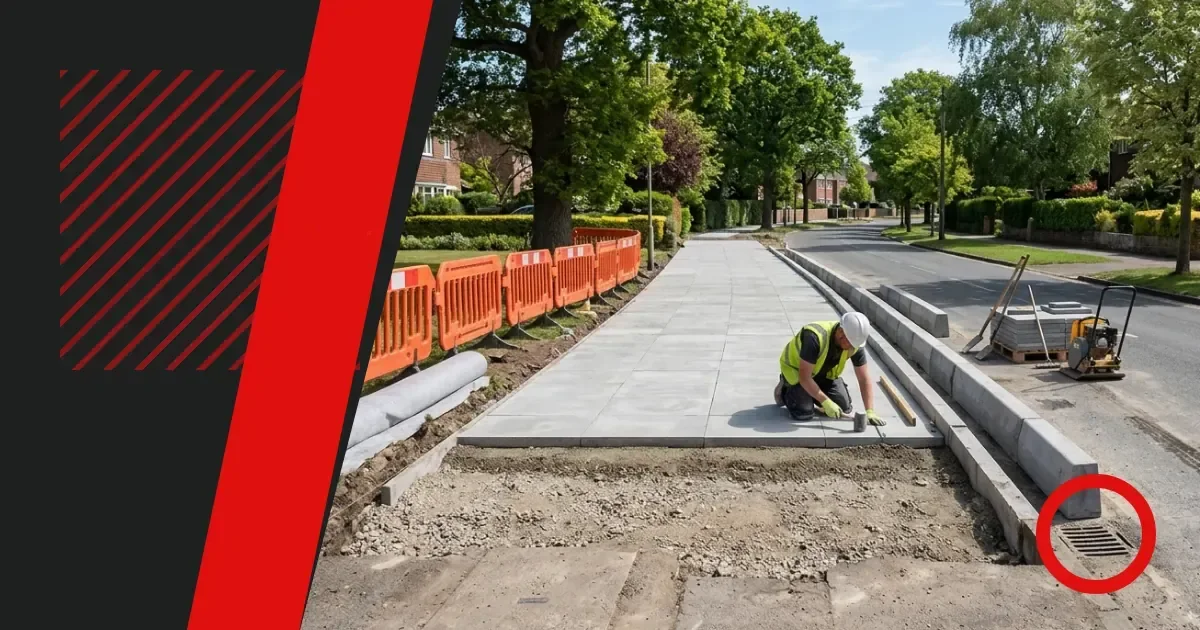
Camps Highways looks at footway reconstruction, the process of removing and replacing the entire pavement structure from formation level upwards. This goes beyond resurfacing, which addresses only the wearing course, and becomes necessary when the underlying layers have failed. The reader will understand when reconstruction is warranted, what the work involves and how it differs from less invasive repairs.
Reconstruction versus resurfacing
Resurfacing replaces the top layer of a footway, typically the binder course and wearing course, and leaves the sub-base intact. Reconstruction strips out every layer down to the natural ground or formation level and rebuilds from there. The choice hinges on whether the underlying structure still performs its job.
A footway that shows isolated surface cracking may need only a fresh wearing course. One with widespread settlement, rutting or repeated failure after patch repairs signals deeper problems. Reconstruction addresses structural capacity that resurfacing cannot restore.
Common triggers for full rebuild
Several conditions push a footway beyond the reach of surface treatments. Repeated surface failure in the same location, despite resurfacing, points to sub-base or formation problems. Tree root damage that has lifted or fractured the sub-base often requires excavation and root pruning before new layers go down.
Poor drainage that has saturated the sub-base weakens its load-bearing capacity. Water trapped in the structure cannot be fixed by adding a new top layer. Utilities work that has left trenches reinstated to a lower standard than the original footway sometimes creates weak strips that fail under foot and wheeled traffic.
A carriageway structural assessment uses similar principles for roads, measuring deflection and remaining life; footway assessment relies more on visual condition surveys and trial pits to gauge sub-base integrity.
Layers removed and replaced
Reconstruction typically removes the wearing course, binder course, sub-base and, where necessary, part of the capping layer. The natural formation is exposed, inspected and, if weak or waterlogged, stabilised or improved before rebuilding starts.
New sub-base material — usually Type 1 granular aggregate — is laid in lifts and compacted to the required density. A binder course and wearing course follow, with material chosen to match expected loading. Footways carrying only pedestrian traffic need a lighter specification than those shared with delivery vehicles or subject to overrun from adjacent parking.
| Layer | Purpose | Typical depth range |
|---|---|---|
| Wearing course | Surface finish and skid resistance | 20–40 mm |
| Binder course | Load distribution | 40–60 mm |
| Sub-base | Load spreading and drainage | 100–150 mm |
| Capping | Formation protection | Variable, if required |
Drainage integration
Reconstruction offers the chance to install or renew linear drainage channels, replace broken gullies and correct falls that have reversed over time. A footway rebuilt without addressing drainage will trap water in the new sub-base and shorten its life.
Programme and access constraints
Full reconstruction takes longer than resurfacing because of the excavation, disposal and layer-by-layer build. A residential footway measuring a few hundred metres might require two to three weeks, depending on width, depth and traffic management needs.
Access to properties must be maintained or managed through temporary ramps, and utility services exposed during excavation need protection or diversion. Traffic management for roadworks applies equally to footway schemes that affect pedestrian flow or require lane closures on adjacent roads.
Material reuse and disposal
Excavated material often includes broken paving slabs, brick edging and contaminated sub-base that cannot be reused. Clean granular sub-base can sometimes be crushed and reused as capping, reducing disposal costs. Recycled road planings from carriageway resurfacing serve a similar purpose in footway capping layers.
When surface treatment remains appropriate
Not every footway showing wear needs reconstruction. Surface patching, slurry sealing or thin overlay works where the sub-base remains sound and surface damage is shallow. A condition survey that includes trial pits or core samples distinguishes between cosmetic wear and structural failure.
Authorities working to a highway term maintenance contract often define thresholds for intervention based on defect size, frequency and location. Isolated cracks or minor surface deformation are repaired; widespread settlement or sub-base pumping triggers reconstruction.
- Commission a condition survey that includes trial pits at points of visible distress to assess sub-base integrity and drainage performance.
- Review utility records for recent trenching or known service conflicts that might have weakened the structure.
- Check for tree root activity near areas of lifting or cracking, and involve an arborist if root pruning or barriers are needed before reconstruction.
- Specify materials and layer thicknesses appropriate to expected loading, distinguishing between pedestrian-only and shared-use footways.
- Plan traffic management and access early, including pedestrian diversions and temporary ramps to properties.
- Integrate drainage work during excavation to correct falls, renew gullies and install linear channels where needed.
Cost and long-term value
Reconstruction costs more per square metre than resurfacing because of excavation, disposal and the depth of material replaced. The trade-off is a longer service life and the opportunity to fix underlying problems that resurfacing would simply cover.
A footway resurfaced over a saturated sub-base will fail again within a few years. One reconstructed with proper drainage and compaction can last two decades or more before the next major intervention. The upfront cost spreads over a much longer period, reducing whole-life expense.
Specification and contractor capability
Reconstruction demands tighter control of compaction, layer thickness and material grading than surface treatments. Contractors bidding for the work need the plant and experience to achieve specified densities and manage excavation safely around services. Highways term maintenance contracts often include footway reconstruction as a standing item with rates already agreed.
Future maintenance and reinstatement standards
Once reconstructed, a footway should be protected from premature failure through reinstatement controls on utility works. Trenches cut through new pavement need to match the original specification, not simply filled and patched. Authorities can attach conditions to street-works licences that require core samples or permanent reinstatement to the full depth disturbed.
Regular surface maintenance — crack sealing, weed control and gully clearance — extends the life of the reconstruction by preventing water ingress and surface breakdown. The investment in full rebuild is wasted if minor defects are left to grow.
#Footway #Resurfacing #Drainage
Download PDF: Footway reconstruction planning checklist PDF, 29 KB
Frequently asked questions
When does a footway need reconstruction instead of resurfacing?
Reconstruction becomes necessary when the underlying sub-base or formation has failed, shown by repeated surface failure, widespread settlement, tree root damage or saturated layers. Resurfacing only replaces the top layer and cannot restore structural capacity once deeper problems exist.
What alternative methods do councils use for non-chemical weed control on footways?
Councils now use steam weeding, hot-water treatment, mechanical brushing and acetic-acid-based herbicides as alternatives to glyphosate. Each method has different costs, frequencies and effectiveness depending on weed type and footway surface.
How long does footway reconstruction typically last compared to resurfacing?
Properly executed reconstruction with good drainage and compaction can last two decades or more before major intervention is needed again. Resurfacing over a sound sub-base might last eight to twelve years, but over a failed sub-base it may fail within a few years.